

Article by
Dan Conneally - NMLS 339916, LO13164, BK3246524, CQ1072086
Dan Conneally has been successfully helping Florida families with thier real estate related situations for the last 21+ years, regardless of credit or past financial background.
While Dan is effective with institutional lending, he particuarly shines when matters require unique strategies involving noninstitutional resources.
Check out his legions of testimonials from real Florida families at Google, Facebook and the BBB to get a sense of the caliber and effectiveness he achieves. Dan has appeared on television speading the message of hope to good folks that need diligent, discrete, nonjudgy care.
The best property-backed loan isn’t simply the one that moves fastest. It’s the one that fits your property’s equity, your financing goal, and a realistic repayment plan. If you’re comparing asset-based lenders Tampa borrowers turn to, clear answers about the collateral review and loan structure can make a stressful decision feel more manageable.
When traditional financing doesn’t match your circumstances or timeline, it’s natural to wonder how much your property value matters, what information a lender needs, and whether a loan could help address foreclosure pressure, debt, taxes, or improvements. Asset-based underwriting centers on the real estate securing the loan, while the property’s equity, the purpose of the financing, and your exit strategy all help shape the review.
This guide explains how Tampa asset-based lending works and what to compare, including loan fit, terms, review timelines, and repayment plans. You’ll also learn what to prepare for a property-backed loan request. AHL HardMoney is based in Tampa and lends across Florida, connecting financing goals with available real-estate equity through options such as home equity, refinance, debt consolidation, tax-related, and home improvement loans.
Key Takeaways
- Learn how property equity, loan purpose, title details, and a repayment plan can shape a property-backed loan review.
- Compare options such as cash-out refinance, home equity, debt consolidation, home improvement, and foreclosure refinance by their intended use.
- See what to organize before speaking with asset-based lenders Tampa borrowers may consider, from property details to existing debt.
- Understand why collateral and a workable exit strategy matter, including the risks if repayment falls behind.
- Explore AHL HardMoney’s Tampa-based approach and how its reported review and closing timelines can vary by situation.
What Tampa Asset-Based Lenders Consider Before Financing a Property
Property equity can open a financing path when a borrower’s circumstances don’t fit a conventional process, but the property’s value alone doesn’t secure approval. Asset-based lending is financing evaluated substantially through real-estate collateral and available equity, alongside the loan purpose and a credible repayment plan. Unlike unsecured borrowing, the loan is secured by property, so failure to repay could put ownership at risk.
For asset-based lenders Tampa borrowers approach, the review is about the whole picture: what the property may support, what debt or claims are already attached to it, and how the borrower expects to repay. Asset-based lending provides a foundational overview of loans secured by assets, including real estate.
For a quick overview of the concept, watch this video:
How property equity can shape a Tampa loan review
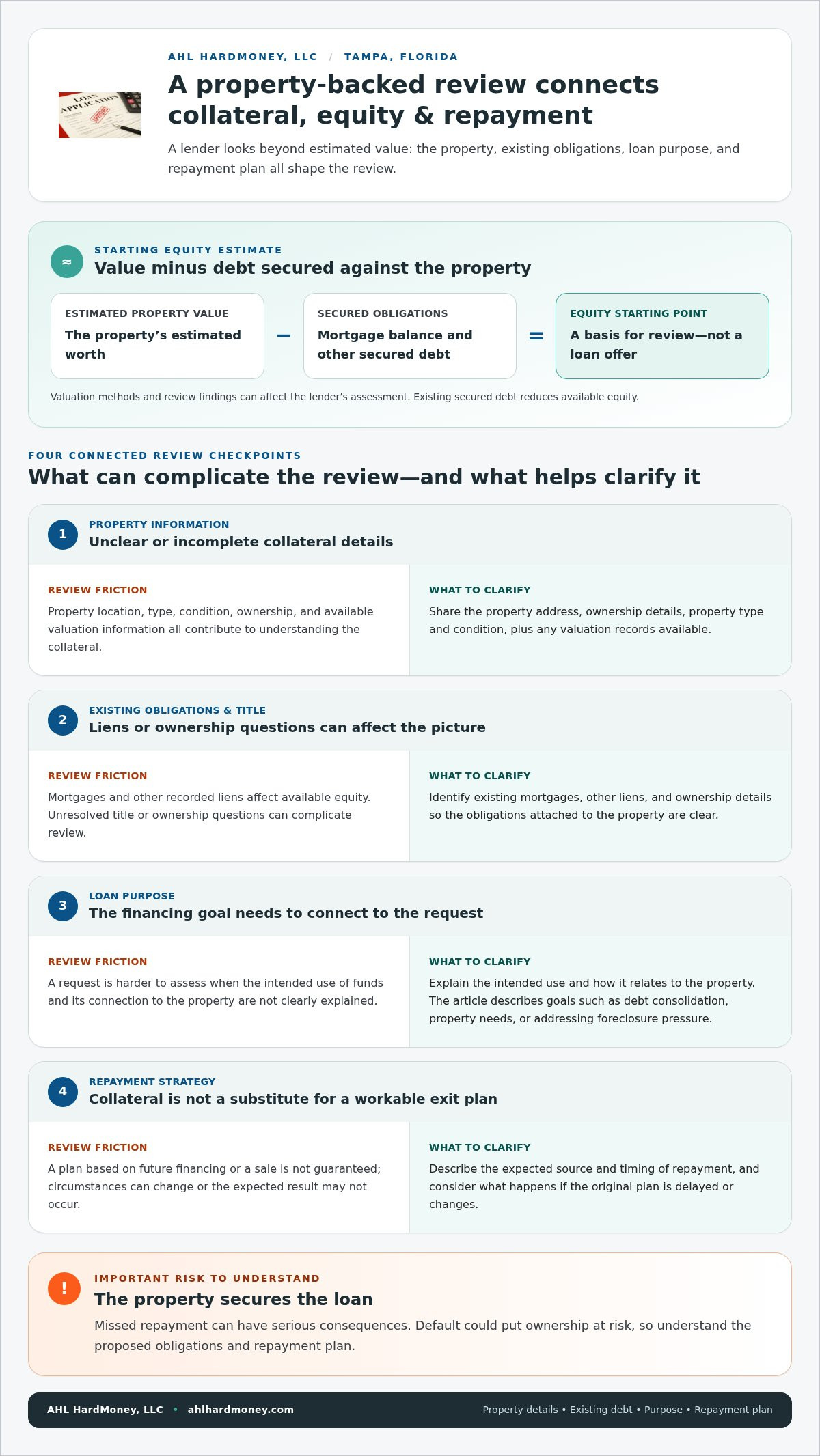
A basic equity estimate is the property’s estimated value minus the debt secured against it. For example, a Hillsborough County homeowner would consider the estimated value of their home and subtract its mortgage balance and other secured obligations. This is a starting point, not a loan offer: valuation methods and review findings can affect the lender’s assessment.
Details matter. A lender may review the property’s location, type, condition, ownership, title, and recorded liens. Existing secured debt reduces the equity available, while unresolved title or ownership questions can complicate the review. A home equity loan is one possible way to access property equity; see Tampa home equity loan options.
When asset-based financing may fit a borrower’s goal
Cash-out refinance may help a borrower access available equity for a defined purpose, such as consolidating debt or addressing property needs. A refinance may also be considered when timing is pressing, including when a borrower is trying to address foreclosure pressure. Financing is not an assured outcome, and urgency doesn’t remove the need to understand the proposed terms and repayment obligations.
Bring a practical exit plan to the discussion. That could involve explaining how the loan will be repaid or what future financing or other funds are expected to repay it. Collateral supports the request, but it isn’t a substitute for a workable plan. The strongest review starts with a clear goal, accurate property and debt information, and an honest account of how repayment can fit the borrower’s circumstances.
How Tampa Asset-Based Lenders Assess Collateral, Equity, and Repayment
A property-backed request is reviewed as a connected set of details, not just an estimated property value. Asset-based lenders Tampa borrowers approach typically need to understand the property, the debt already secured against it, the reason for borrowing, and how the loan is expected to be repaid. The order and depth of review can vary with the transaction.
A typical review may move through these steps:
- Property information: Share the address, ownership details, property type, condition, and available valuation information.
- Existing obligations: Identify mortgages and other liens that may affect available equity or title.
- Loan purpose: Explain the intended use of funds and how the request connects to the property.
- Repayment strategy: Describe the expected source of repayment and the timing behind the plan.
Credit circumstances may also be considered alongside equity, ownership, loan purpose, and other transaction details. Collateral-focused underwriting does not mean credit history is irrelevant in every decision. The exact terms, documentation, and timeline depend on the specific request and the information needed to review it. For a wider view of how lenders evaluate property-backed transactions, see this commercial real estate financing overview.
What a collateral review can involve
Prepare the property address, ownership information, details of existing liens, and any valuation records you have. The lender may also consider the property’s condition, type, and location as part of assessing the collateral. A Tampa residence, a property in Hillsborough County, and one in Pinellas or Pasco County may each present different property details for review. Clear, consistent information can help explain the request and surface questions early.
Because the property secures the loan, missed repayment can have serious consequences. Collateral does not remove repayment obligations. Default could put ownership at risk, so understand the proposed obligations before moving forward.
Why the exit strategy matters as much as equity
An exit strategy explains how you intend to repay the loan. A borrower might plan to refinance, sell the property, or use another documented source of funds. These are plans, not guaranteed proceeds: a future refinance depends on the circumstances at that time, and a sale may not produce the expected result. Consider what you would do if the original plan is delayed or changes.
For a request centered on accessing equity, review the details of cash-out refinance options alongside your intended use and repayment plan. A clear explanation helps connect the property review to the financing goal.
Compare Tampa Asset-Based Loan Options by Purpose and Risk
The right structure depends on the problem you need to solve, the equity available, and how you expect to repay. For asset-based lenders Tampa borrowers consider, comparing loan purpose alongside collateral and repayment obligations can help prevent a short-term fix from creating a larger challenge later.
| Loan purpose | Potential program type | Collateral | Key consideration |
|---|---|---|---|
| Access equity for a defined expense | Cash-out refinance | Property securing the refinanced loan | Review how refinancing affects existing mortgage obligations and your repayment plan. |
| Borrow against home equity | Home equity loan | Home used to secure the loan | Understand how this loan differs from refinancing an existing mortgage. |
| Combine eligible debts | Debt consolidation hard-money loan | Real estate securing the financing | Compare the new payment obligations with the debts being addressed. |
| Fund property work | Home improvement hard-money loan | Property securing the financing | Plan repayment even if the project takes longer or costs more than expected. |
| Address foreclosure pressure | Foreclosure refinance loan | Property securing the refinance | Timing matters, but financing is not a guaranteed outcome or substitute for reviewing terms. |
Match the loan structure to the reason you need financing
A cash-out refinance program may fit a borrower seeking to access equity through a refinance. A home equity loan option, by contrast, is generally a separate loan secured by the home, rather than a replacement for the existing mortgage. The structure and obligations depend on the loan terms.
If the goal is to address multiple debts, explore debt consolidation hard-money loans as a purpose-specific option. Consolidating balances doesn’t erase what’s owed; it changes how the obligation is structured and may put the property at risk if payments aren’t made.
Compare the trade-offs before choosing property-secured financing
Property-backed financing can involve repayment deadlines, fees, and obligations that differ from longer-term financing. Read all written terms before accepting, including the payment schedule, maturity date, fees, and what happens if repayment is late. Missed payments can have serious consequences, including risk to the property securing the loan.
For business financing beyond property-secured options, the U.S. Small Business Administration outlines SBA business loan programs, including programs for certain fixed-asset needs. For broader state context on property-backed financing, see this Florida asset-based financing guide. Match any option to a realistic repayment timeline and the full cost of the obligation.
Prepare for an Asset-Based Loan Review in Tampa and Nearby Counties
A focused request helps make a property review more efficient. Before approaching asset-based lenders Tampa borrowers are considering, organize the facts about the property, the financing goal, and your intended repayment plan. Clear information can help identify questions early, especially when the request is time-sensitive.
Information to organize before discussing your property
- Define the goal. State what the funds are meant to address, such as refinancing, debt, taxes, or property improvements. Explain the outcome you’re seeking.
- Identify the property. Gather its full address, county, property type, occupancy status, and a straightforward description of its current condition.
- Summarize ownership and debt. Note the owners and provide available details about the existing mortgage, other liens, and balances secured by the property.
- Collect value information. Organize any recent valuation information or records that can help describe the property. Treat an estimate as a starting point, not a guaranteed lending value.
- Map out repayment. Describe the intended repayment source, such as a planned refinance, sale, or another documented source of funds, and give a realistic expected timeline.
Keep the information consistent across your notes and documents. If ownership, debt, or the property’s condition is uncertain, explain what you know rather than relying on assumptions.
Local property and transaction details to communicate
Include the county and community where the property is located. Tampa and nearby areas in Hillsborough, Pinellas, and Pasco counties can involve different property and transaction details; the same is true for Polk, Manatee, Citrus, and Hernando counties. Sharing the county, property type, occupancy, condition, and any time-sensitive deadlines helps frame the request. A location mention alone doesn’t establish eligibility, since each property and transaction is reviewed on its own details.
If foreclosure pressure is part of your situation, outline the relevant timing and review the Florida foreclosure refinance loan information. AHL HardMoney reports that approvals often occur within 30 minutes and closings in 5 to 15 days. These are company-reported timelines, not guarantees; timing varies with the request, documentation, and review.
With your goal, property details, debt information, and repayment outline together, you’ll be better prepared for a clear discussion of the request.
Explore AHL HardMoney’s Tampa-Based Asset Financing Path
AHL HardMoney is headquartered in Tampa and provides real-estate-secured financing across Florida. For borrowers comparing asset-based lenders Tampa has to offer, the key is matching the financing purpose to the property’s available equity and a workable repayment plan. AHL’s programs include cash-out refinance, home equity loans, private-money refinance, debt consolidation, home improvement, tax-related financing, jumbo loans, and foreclosure refinance.
AHL programs that may align with common borrower goals
If your goal is to access property equity through refinancing, cash-out refinance may be a relevant starting point. A home equity loan can also draw on property equity, while debt consolidation, home improvement, and foreclosure refinance programs address different financing purposes. Each request still depends on the property, existing obligations, transaction details, and repayment strategy.
For borrowers considering financing tied to a higher-value property, AHL also offers jumbo hard-money loans. The right fit depends on the specific property and request, rather than property value alone.
AHL reports that approvals often occur within 30 minutes and closings in 5 to 15 days. These are company-reported, situation-dependent timelines, not guarantees. Review and closing timing can vary based on the property, documentation, and transaction.
What to expect from a clear next step
Before discussing a request, bring together four essentials: the property address and ownership details, your financing purpose, current mortgage or lien information, and a realistic repayment plan with an expected timeline. This gives the review a clear starting point and helps connect the collateral to the outcome you’re seeking.
Be prepared for terms and timing to depend on the particular property and transaction. A well-organized request makes it easier to discuss the details, but it doesn’t guarantee approval. Understanding the proposed obligations and how you plan to meet them remains central to choosing a property-backed loan.
To learn more about AHL HardMoney’s background and approach to Florida real-estate financing, learn about AHL HardMoney.
Choose a Property-Backed Loan With a Clear Plan
A strong loan request connects three essentials: the property’s available equity, a defined financing purpose, and a realistic repayment strategy. As you compare asset-based lenders Tampa borrowers may consider, look beyond speed. Understand how the collateral will be reviewed, what obligations the loan creates, and whether the repayment plan fits your circumstances.
Preparing property, ownership, and existing debt information can help make the review more focused. Then compare the loan structure to your goal, whether you’re seeking to access equity, address debt or property needs, or respond to time-sensitive pressure. The property secures the financing, so repayment terms deserve careful attention.
AHL HardMoney is headquartered in Tampa and serves borrowers throughout Florida. The company reports approvals often within 30 minutes and closings in 5 to 15 days, depending on the property and transaction. These timelines aren’t guaranteed. AHL HardMoney’s NMLS ID is 380601.
With a clear goal and an informed repayment plan, you can take the next step with greater confidence.
Frequently Asked Questions
What does an asset-based lender in Tampa look at?
An asset-based lender reviews the property and the full loan request, not just its estimated value. This can include available equity, existing mortgages or liens, ownership and title details, property type and condition, and the purpose of the financing. The lender may also consider credit circumstances and the borrower’s repayment plan. For asset-based lenders Tampa borrowers are comparing, a clear exit strategy is as important as collateral.
Can I get an asset-based loan in Tampa with bad credit?
Bad credit doesn’t automatically determine the outcome, but it also doesn’t guarantee approval. AHL HardMoney focuses on real-estate equity and transaction details, while credit circumstances may still be considered as part of the review. The property, existing debt, financing purpose, and repayment plan all matter. Be prepared to explain your situation accurately and understand that eligibility and terms depend on the specific request.
How quickly can an asset-based loan close in Tampa?
AHL HardMoney reports that approvals often happen within 30 minutes and closings in 5 to 15 days. These are company-reported timelines, not guarantees. The actual schedule can vary with the property, transaction, documentation, and review requirements. If you’re working against a deadline, share it early and organize property and debt information so the request can be assessed with fewer avoidable delays.
Is my Tampa property at risk with an asset-based loan?
Yes. The property secures the loan, so falling behind or defaulting could put your ownership at risk. Before accepting financing, review the written terms, payment obligations, repayment deadline, and consequences of missed payments. Make sure your repayment plan is realistic, including what you’ll do if a planned refinance or sale takes longer than expected. Equity may support a loan request, but it doesn’t remove the obligation to repay.
What documents should I prepare for a Tampa asset-based lender?
Start with the property address, ownership details, and available information about its estimated value and condition. Gather current mortgage balances and details of other liens, then write down the financing purpose, requested outcome, and a realistic repayment source with an expected timeline. The lender may need additional documentation based on the property and transaction. Keep the information accurate and consistent, and identify any deadlines that could affect the request.
What is the difference between a hard-money loan and an asset-based loan?
The terms are often used for overlapping types of financing, but “asset-based” describes the focus on collateral, while “hard money” commonly refers to real-estate-secured private financing. In either case, the property and its available equity can be central to review. The label alone doesn’t tell you the full cost or risk, so examine the specific repayment schedule, written terms, and consequences of default.
Can I use a Tampa home equity loan to consolidate debt?
A home equity loan may be used to access property equity for a defined purpose, including consolidating debt, subject to the loan review and terms. AHL HardMoney also offers debt consolidation hard-money loans. Compare the new payment obligations with the debts you intend to address, and consider that the property secures the financing. Consolidation changes how debt is structured; it doesn’t erase the obligation to repay it.
Disclaimer:
While Dan is not a real estate attorney, he is a Full Time, Licensed Florida Mortgage and Real Estate Broker Professional coupled with 21+ years of successful strategies, methodologies and techniques that have proven effective to the benefit of Florida families.
While not every conversation is a deal, we promise to leave you better off then before you called. We serve everyone we come in contact, with the highest levels of integrity and dignity.
We invite you to make the call 📲


