


Article by
Dan Conneally - NMLS 339916, LO13164, BK3246524, CQ1072086
Dan Conneally has been successfully helping Florida families with thier real estate related situations for the last 21+ years, regardless of credit or past financial background.
While Dan is effective with institutional lending, he particuarly shines when matters require unique strategies involving noninstitutional resources.
Check out his legions of testimonials from real Florida families at Google, Facebook and the BBB to get a sense of the caliber and effectiveness he achieves. Dan has appeared on television speading the message of hope to good folks that need diligent, discrete, nonjudgy care.
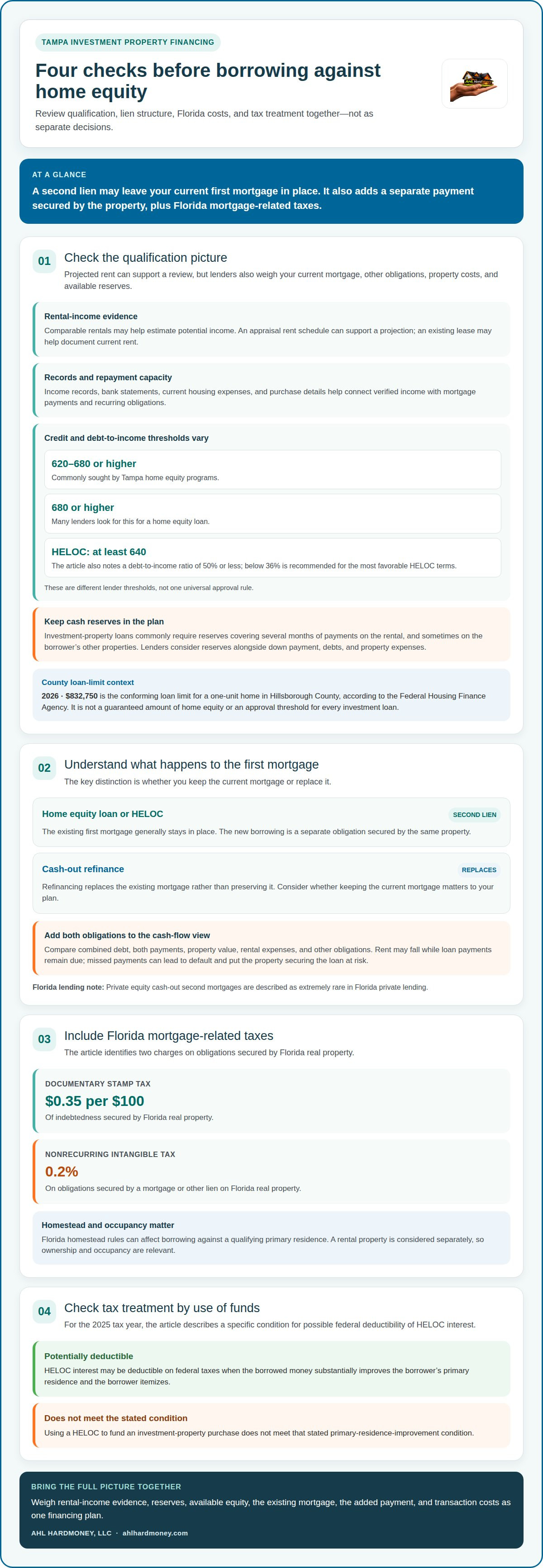
Tax deductibility isn’t automatic. For the 2025 tax year, HELOC interest may be deductible on federal taxes when the borrowed money substantially improves the borrower’s primary residence and the borrower itemizes. Using a HELOC to fund an investment-property purchase doesn’t meet that stated condition. A home equity loan for an investment property in Tampa can still be a funding option, but the costs and fit depend on your existing mortgage, available equity, and ability to manage the added payment.
It makes sense to weigh the tax impact alongside the borrowing cost, especially when rental income is part of your plan. The right financing choice should support the investment without overlooking the debt already secured by your home.
This article explains how rental income and existing mortgages can affect qualification, what Florida mortgage-related costs to consider, and how a home equity loan compares with a HELOC or cash-out refinance. You’ll also see how the funding structure may shape your monthly obligations and tax considerations, so you can assess the options with a clearer picture.
Key Takeaways
- Projected rent may support qualification, while reserve requirements and the lender’s rental-income assessment also shape the decision.
- A second-lien loan can leave your existing first mortgage in place, but the added debt and Florida mortgage-related taxes affect the overall financing picture.
- Compare a home equity loan, HELOC, and cash-out refinance by how each changes your borrowing structure and payment obligations.
- Estimate the down payment and available equity together to see whether your home equity can support the Tampa investment purchase.
- Tax treatment depends on how borrowed funds are used and whether you itemize, so account for the purpose of the loan when considering potential deductions.
Can rental income help me qualify for a Tampa investment loan?
Rental income may support financing for a Tampa investment property, but projected rent is only one part of the picture. A lender may use comparable rentals to estimate the property’s potential income, while also considering existing mortgage payments and other financial obligations. Before relying on projected rent, account for your own income, expenses, and the costs of owning and maintaining the property.
Credit and debt-to-income standards also shape the review. Home equity programs in Tampa commonly look for credit scores in the 620-680 range or higher, and many lenders look for 680 or higher for a home equity loan. A HELOC typically requires a score of at least 640 and a debt-to-income ratio of 50% or less. A ratio below 36% is recommended for the most favorable HELOC terms. These figures describe different thresholds, not a single universal approval rule.
Income documentation helps connect the numbers to a stable repayment plan. A lender may review income records, bank statements, current housing expenses, and details of the proposed purchase. For rental income, the appraisal’s rent schedule can support the projected amount; an existing lease may also help show current rent. Clear records let the lender compare verified income with mortgage payments and other recurring obligations. Consistent figures across documents make the qualification review easier to follow.
Cash reserves matter because rental income can change while mortgage payments remain due. Investment-property loans commonly require reserves covering several months of payments on the rental, and sometimes on the borrower’s other properties. The lender considers those reserves alongside the down payment, existing debts, and property expenses. For example, a borrower with projected rent but limited funds set aside may present a different repayment profile from one with comparable income and stronger reserves.
Keep the loan limit in context. For 2026, the conforming loan limit for a one-unit home in Hillsborough County, Florida, is $832,750, according to the Federal Housing Finance Agency. That limit concerns conforming financing, not a guaranteed amount of home equity or an approval threshold for every investment loan. For owners weighing a property with no mortgage, details about financing free-and-clear Florida property show how that situation differs from borrowing against a home with an existing lien.
Will a home equity loan or HELOC affect my existing first mortgage?
A second lien can provide additional borrowing while leaving the first mortgage in place. Florida recording taxes add to the financial picture, and the property’s use affects homestead considerations.
Florida homestead rules can affect borrowing against a qualifying primary residence, while a rental property is considered separately. Ownership and occupancy therefore matter. If rental income falls, the loan payment is still due; missed payments can lead to default and put the property securing the loan at risk.
Second-Lien Borrowing and First-Mortgage Preservation
A home equity loan or HELOC secured by a property with an existing mortgage generally creates a second lien. The original mortgage stays in place, which may let you preserve its existing terms instead of replacing it through refinancing. Compare the combined debt, payments, and property value before choosing this approach. The new loan is a separate obligation secured by the same property.
That distinction matters when the current mortgage has terms the borrower wants to keep. A second lien doesn’t pay off the first mortgage; it adds another claim secured by the property. Review how both payments fit alongside rental expenses and other obligations. The borrower’s overall profile, available equity, and lender requirements shape whether this structure fits.
Private Second Mortgages and Lender Considerations
A second mortgage is one option to consider, but private equity cash-out second mortgages are extremely rare in Florida private lending. A lender assessing a second mortgage considers the existing first lien and the property securing the new debt, along with the repayment plan and proposed loan structure.
Compare a second lien with refinancing, which replaces the existing mortgage rather than preserving it. For a Florida property owner, the key question is whether keeping the first mortgage matters to the plan. The answer affects how you weigh the new payment, existing obligations, and funds available from the property.
Florida mortgage recording taxes are part of the transaction costs. The state imposes documentary stamp tax of $0.35 per $100 of indebtedness secured by Florida real property, plus a nonrecurring intangible tax of 0.2% on obligations secured by a mortgage or other lien on Florida real property. These charges apply to the secured obligation, so include them when evaluating the total borrowing plan.
Before moving forward, map the first mortgage payment, proposed second-lien payment, and rental income together. A rent decline can tighten cash flow, while a missed payment can create serious consequences for the property securing the loan. The lending approach and financing options can help frame a discussion around preserving an existing mortgage and managing additional secured debt.
Home equity loans, cash-out refinancing, and personal loans as alternatives
A home equity loan for an investment property in Tampa may help fund a purchase when using property equity fits your plan. Options for non-owner-occupied properties can differ, and private equity cash-out second mortgages are extremely rare in Florida private lending. Consider the property’s use, the existing mortgage, and how the added payment fits your budget.
Cash-Out Equity Loans on Florida Real Estate
A home equity loan is a separate loan secured by property, while a cash-out refinance replaces the existing mortgage with a new, larger mortgage. The refinance pays off the prior loan, and the remaining proceeds can be used toward an investment purchase. Compare the new mortgage terms and payments with the alternative of keeping your first mortgage and adding a separate loan. Each structure serves a different financing need.
Available borrowing depends on property value, existing mortgage balances, and the lender’s combined loan-to-value limit. Lenders commonly cap combined loan-to-value ratios for home equity products at 80-90%. A home equity loan may allow borrowing up to 85% of home equity, while a HELOC may allow up to 90%. These are different product limits, not a promise that a borrower can qualify for the maximum.
Loans for Non-Owner-Occupied Properties
When using a non-owner-occupied property as security, its rental use and the existing liens matter. Consider how much equity is available and how the proposed payment fits your repayment plan. Private second-mortgage options are especially limited in Florida private lending, so compare the available structures carefully.
Fixed-rate home equity loans provide a lump sum with a repayment schedule that doesn’t change with each draw. Tampa home equity loans commonly have repayment terms of 5-20 years. That structure can suit a planned down payment because the borrower knows the amount borrowed and can plan around scheduled payments. A HELOC differs: it is a revolving credit line, and payments are based on the amount drawn.
Personal loans offer another funding route without placing a lien on real estate, but they don’t draw on home equity. Qualification and repayment depend on the lender’s assessment of the borrower’s finances, rather than the property’s available equity. Compare the total obligation, payment structure, and intended use before selecting among sources. A loan secured by property puts that collateral at risk if repayment obligations aren’t met.
For example, a Tampa home valued at $450,000 with a $250,000 first-mortgage balance could support a second lien of up to $132,500 at an 85% combined loan-to-value limit. That example shows how existing debt affects available equity. When considering a home equity loan for an investment property in Tampa, use the property value and lien balance to understand how the lender’s limit affects potential borrowing.
How a lender can structure home equity financing for an investment property down payment
A financing plan should connect the equity available, the planned purchase, and the new payment. Match the amount you need for the rental down payment with borrowing that fits your overall obligations.
Investment-property down payments typically range from 15 to 25 percent, depending on the loan program, unit count, and borrower profile. Those examples help frame the target amount, but the required percentage depends on the financing program and property details.
Start by identifying the property that would secure the loan, its current mortgage balance, and the amount you need to borrow. Then consider how the funds would support the purchase and how the new payment would fit alongside the rental property’s expenses. A clear use for the funds helps keep the borrowing aligned with your purchase plan.
Monthly payments depend on the amount drawn, interest rate, and repayment term. For example, a $50,000 HELOC repaid over 15 years at 8.50% has estimated monthly payments of $492 during repayment. At 9.50% over 15 years, the estimated monthly payment is $522. These examples show why borrowers should consider the payment phase, not only the initial access to funds.
A draw period doesn’t mean there are no monthly payments. During an interest-only draw period, a fully drawn $50,000 HELOC at 8.00% has a stated monthly payment of $333. Once repayment begins, monthly payments generally include both principal and interest. The exact structure depends on the balance, rate, and repayment period.
Before using equity, consider both properties: the home securing the loan and the rental you plan to buy. Rental income may form part of your repayment plan, but you still need to account for the new equity payment and existing housing obligations. The down payment is just one part of the decision.
If the available equity falls short, reconsider the purchase amount or funding structure. Plan the borrowing around the intended purchase and what you can repay, rather than treating the down payment as an isolated figure.
Home equity products versus cash-out refinancing
The central choice is whether to add a lien or replace your existing mortgage. For a Tampa rental purchase, compare the borrowing structure, transaction costs, and effect on your current loan before deciding.
A home equity loan or HELOC can add borrowing while leaving the first mortgage intact, which may matter if its current terms fit your plan. A cash-out refinance replaces the mortgage, pays off the existing balance, and releases any remaining proceeds for another use. The new terms apply to the refinanced balance, not just the cash you receive. The better fit depends on how much you need and whether keeping the first mortgage is important.
Home equity loans provide a lump sum with a repayment schedule, while a HELOC provides a revolving credit line. For either option, the lender considers the property, existing liens, requested amount, and borrower’s credit score. These factors help determine whether the available equity and proposed repayment structure fit the purchase. A minimum amount of cash needed at closing can help frame the funding request, but it should not be confused with the loan’s total cost.
Cash-out refinancing may suit you if you want one new mortgage and a larger amount of funds. It also replaces your existing mortgage, so compare the new terms with your current loan before deciding. A second-lien loan keeps the additional borrowing separate from the first mortgage, but you’ll need to manage both payments alongside rental expenses.
Appraisal and title work can also affect the decision. These are transaction-related expenses, not loan pricing. Consider how the appraised value and recorded liens affect the amount you can borrow, since the property secures the loan.
Before choosing, identify how much you need for the investment, whether keeping your current mortgage matters, and how each option’s payments and closing requirements fit your plan. If your existing mortgage terms suit you, preserving them may be a priority. If you prefer one new mortgage, compare cash-out refinancing. Either way, account for the rental property’s operating expenses.
Tax treatment also depends on how borrowed funds are used. For the 2025 tax year, HELOC interest may be deductible on federal taxes when funds substantially improve the borrower’s primary residence and the borrower itemizes. That condition does not describe using funds for an investment-property purchase, so include tax considerations when evaluating the purpose of the loan.
AHL HardMoney: Home Equity Loans
AHL HardMoney, llc offers Home Equity Loans for borrowers considering a second lien to fund an investment-property purchase. Its Cash-Out Refinance may suit owners considering replacing an existing mortgage. The right approach depends on the available equity, current mortgage, and repayment plan.
AHL HardMoney, llc can review the financing need and help identify which option aligns with the property and intended use of funds. Approvals are often available within 30 minutes, and loans can close in 5 to 15 days, regardless of credit history. These are stated service timeframes, not a promise of a particular loan outcome.
If you're ready to discuss using home equity toward a Tampa investment property, contact AHL HardMoney, llc to talk through your financing needs.
Turn your financing plan into a clear next step
A home equity loan for an investment property in Tampa should support a plan that works beyond closing. Before moving forward, define how you’ll use the funds, how the added borrowing fits your finances, and how you plan to repay it. A clear plan gives your financing conversation a practical starting point.
AHLHardMoney™ offers Home Equity Loans, Cash-Out Refinance, and Refinance Loans. These options can help you consider whether adding a loan or refinancing better aligns with your property and funding needs.
Take the next step with a financing plan built around your goals and the property you want to invest in.
Frequently Asked Questions
Are the interest payments tax deductible?
Not automatically. For the 2025 tax year, the stated federal deduction condition applies when borrowed money substantially improves the borrower’s primary residence and the borrower itemizes. That condition doesn’t describe borrowing to purchase a rental property. Keep records showing how the funds were used, since the loan’s purpose matters when assessing tax treatment. Don’t assume interest qualifies for a deduction just because the debt is secured by real estate.
How Much Can You Borrow With HELOCs and HELOANs in Florida?
The amount depends on property value, existing liens, and the lender’s combined loan-to-value limit. Home equity products commonly have combined loan-to-value caps of 80-90%. A home equity loan may allow borrowing up to 85% of home equity, while a HELOC may allow up to 90%. These figures describe potential product limits, not guaranteed proceeds. The outstanding mortgage balance and lender’s assessment reduce the amount accessible to an individual borrower.
How much equity can I borrow against in Tampa?
Estimate accessible equity by applying the lender’s combined loan-to-value limit to the property value, then subtracting the existing mortgage balance and other liens. For example, a lender’s limit is not the same as the amount you can borrow: the property valuation, lien balances, and product rules all affect the calculation. HELOC applicants typically need at least 15% equity in their home, alongside other qualification factors.
What Do You Need to Qualify for Home Equity Programs in Florida?
Lenders assess credit, income, debt obligations, property equity, and the liens already recorded against the property. Documentation can include property records, income verification, tax returns, and K-1s when applicable. For rental purchases, projected rent may be considered alongside the borrower’s income and recurring expenses. Cash reserves can also matter, since lenders commonly expect funds covering several months of rental-property payments.
What credit score, income, and equity requirements apply to investment-property home equity loans in Tampa?
Credit score expectations vary by product and lender. Home equity programs commonly look for scores in the 620-680 range or higher, and many lenders look for 680 or higher for a home equity loan. HELOC qualification typically requires at least 640 and a debt-to-income ratio of 50% or less. HELOC applicants typically need at least 15% equity. Documented income and property value also influence the lender’s review.
How do home equity loans compare with cash-out refinancing and investment-property HELOCs in Florida?
A home equity loan typically provides a lump sum while leaving the first mortgage in place. A HELOC provides revolving access to credit, with payments based on the amount drawn. Cash-out refinancing replaces the existing mortgage with a new loan. For a non-owner-occupied property, lenders’ requirements can differ, so the property’s use and lien structure matter. Compare whether preserving the current mortgage or consolidating debt better fits your financing plan.
How much can a Tampa investor borrow based on rental-property value and existing mortgage balance?
One estimate uses Tampa’s typical home value of $356,843 and assumes an existing mortgage balance equal to 50% of value. Under those assumptions, estimated accessible equity is $71,369 at 70% combined loan-to-value, $107,053 at 80%, and $142,737 at 90%. These examples illustrate how a lender’s limit changes potential proceeds. The actual calculation depends on the property valuation, all liens, and the financing terms.
What are the tax implications of using home equity loan proceeds to buy or improve an investment property?
The stated 2025 federal tax condition for potentially deducting HELOC interest applies to funds used to substantially improve the borrower’s primary residence when the borrower itemizes. It doesn’t establish a deduction for proceeds used to buy or improve a rental property. Keep records that trace the borrowed funds to their use, and have a tax professional assess the investment-property treatment before counting on an interest deduction.
Disclaimer:
While Dan is not a real estate attorney, he is a Full Time, Licensed Florida Mortgage and Real Estate Broker Professional coupled with 21+ years of successful strategies, methodologies and techniques that have proven effective to the benefit of Florida families.
While not every conversation is a deal, we promise to leave you better off then before you called. We serve everyone we come in contact, with the highest levels of integrity and dignity.
We invite you to make the call 📲


