


Article by
Dan Conneally - NMLS 339916, LO13164, BK3246524, CQ1072086
Dan Conneally has been successfully helping Florida families with thier real estate related situations for the last 21+ years, regardless of credit or past financial background.
While Dan is effective with institutional lending, he particuarly shines when matters require unique strategies involving noninstitutional resources.
Check out his legions of testimonials from real Florida families at Google, Facebook and the BBB to get a sense of the caliber and effectiveness he achieves. Dan has appeared on television speading the message of hope to good folks that need diligent, discrete, nonjudgy care.
A home equity loan to avoid foreclosure in Tampa may provide funds to address mortgage arrears, but it puts your home at risk if you can’t keep up with the new payments. If you don’t repay a home equity loan, the lender may foreclose and sell the property.
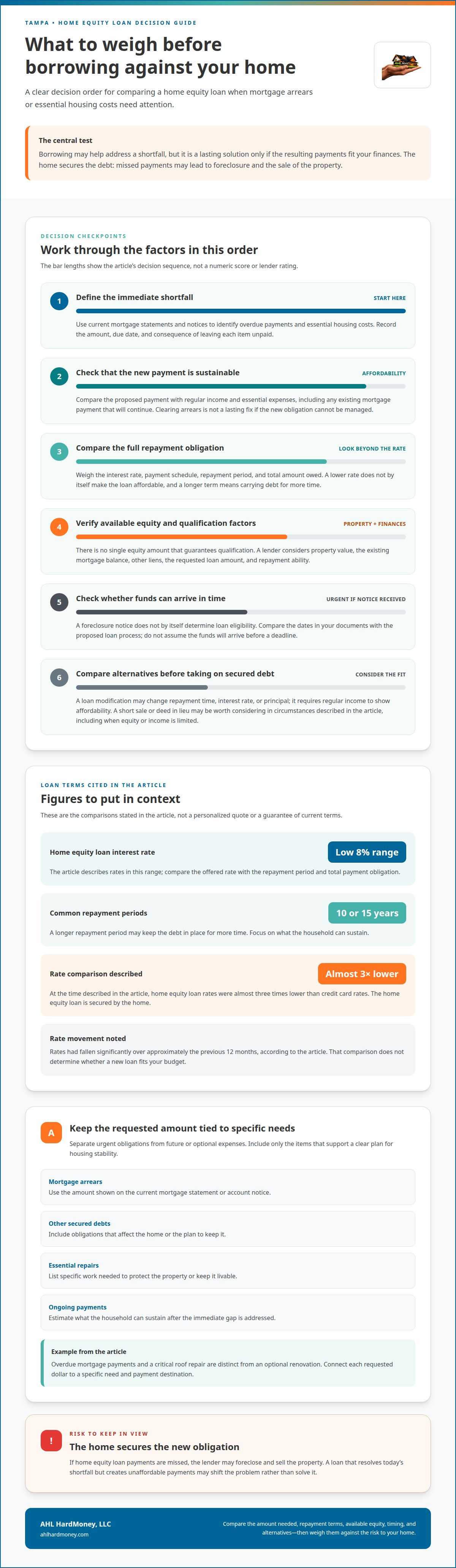
When weighing this option, consider both the immediate need and what you’ll owe afterward. Borrowing against your home may help address a shortfall, but it offers a lasting solution only if the payments fit your finances.
This guide explains how to compare loan terms, estimate how much you need, and consider using funds for essential home repairs. It also covers the risks of missed payments and factors to weigh when deciding whether a home equity loan fits your situation.
Key Takeaways
- Compare the interest rate, repayment period, and total payment obligation, not just how quickly funds may be available.
- Work out the amount needed to address the immediate shortfall and avoid taking on more debt than your plan requires.
- Prioritize uses that support housing stability; carefully weigh optional spending against the added obligation secured by your home.
- Understand the risk: missed home equity loan payments can lead to foreclosure and the sale of your home.
- Florida eligibility depends on the details of your finances, property, and available equity, so understand how these factors shape the loan decision.
Comparing lenders, rates, and loan terms
Compare the full repayment obligation, not just the advertised rate. Tampa homeowners should also weigh alternatives to foreclosure against taking on more debt secured by their homes.
Equity Needed to Qualify
Home equity is the portion of a property’s value that remains after secured debts are accounted for. There’s no single equity amount that guarantees qualification for a home equity loan. A lender considers the property’s value, existing mortgage balance, other liens, and requested loan amount. If a first mortgage and other liens use most of the available value, less equity may remain to support another loan. This matters because usable equity affects both the amount available and whether borrowing can address the arrears.
Loans After a Foreclosure Notice
Receiving a foreclosure notice doesn’t by itself establish whether you can obtain a home equity loan. The decision depends on available equity, repayment ability, loan terms, and whether funds can be arranged in time to address the mortgage problem. Treat the notice as urgent: compare the dates in your documents with the proposed loan process instead of assuming funds will arrive before a deadline.
Compare rates and repayment periods together. Home equity loan rates are in the low 8% range, and repayment periods commonly last 10 or 15 years. Rates had fallen significantly over approximately the previous 12 months. At the time described, home equity loan rates were almost three times lower than credit card rates. Those comparisons don’t settle the decision: the new loan is secured by the home, and a longer repayment period can mean carrying debt for more time.
Ask how the rate, payment schedule, and repayment term affect the total obligation. A lower rate may look attractive, but the loan still needs to fit the household’s regular income and expenses. Compare the amount needed to resolve the immediate shortfall with the amount borrowed. For Tampa borrowers, a Florida foreclosure refinance may also be considered alongside a home equity loan.
Compare alternatives before using equity. A loan modification may extend repayment time, lower the interest rate, or reduce principal; homeowners can seek one regardless of home equity, but need regular income to show affordability. A short sale may suit an owner without equity who needs to sell on better terms than a foreclosure sale. A lender may agree to forgive the remaining balance, and a short sale may affect credit less negatively than foreclosure and a deficiency judgment.
With a deed in lieu, the lender agrees to take the property back. Terms may include forgiveness of some or all mortgage debt, cash for keys or moving expenses, and an agreed move-out date. Homeowners without income may find a short sale or deed in lieu more suitable than taking on another payment. Florida foreclosure deadlines depend on the case stage and court papers, so follow the dates in your documents. Tampa homeowners can find HUD-approved counselors through HUD’s housing counseling search and contact legal aid through Florida legal aid intake channels.
Borrowing only what you need
Start by identifying the specific shortfall the loan would need to address. For a Tampa homeowner facing foreclosure, this may mean calculating overdue mortgage payments and any other essential housing costs included in the plan. Don’t assume the largest amount available is the right target. Focus on what supports a clear, realistic route back to manageable payments.
Prepare a written funding worksheet before settling on a loan amount. Use current statements and notices to separate urgent obligations from future expenses. Record each amount, its due date, and what may happen if it remains unpaid. This makes the immediate need clear and helps prevent unrelated spending from expanding the request.
- Mortgage arrears: Use the amount shown on the current mortgage statement or account notice.
- Other secured debts: Include only obligations that affect the home or the plan to keep it.
- Essential repairs: List specific work needed to protect the property or keep it livable.
- Ongoing payments: Estimate what the household can sustain after the loan funds address the immediate gap.
Separate the payoff goal from the new borrowing obligation. A loan that clears arrears but creates payments you can’t sustain may shift the problem rather than solve it. Compare the proposed payment with regular income and essential expenses, including the existing mortgage if it will remain in place. If the loan replaces existing debt, list the balances that will be paid and the payments that will continue.
For example, a homeowner who needs funds for overdue mortgage payments and a critical roof repair should distinguish those needs from optional renovations. The repair may protect the home, while an unrelated upgrade adds borrowing without directly addressing foreclosure pressure. A clear list connects each planned use to housing stability.
Keep a reserve in the household budget rather than automatically adding it to the loan request. Unexpected expenses can arise, but borrowing extra means taking on more debt secured by your home. Review each proposed use: Is it necessary now? Does it address the immediate problem? Can the household manage the resulting payment alongside ongoing housing costs? Remove items without a clear, supportable purpose.
Compare the requested amount with the funds that will actually reach each obligation. Review the loan terms and disbursement plan so the mortgage shortfall isn’t overlooked while other expenses are paid. A focused request connects each borrowed dollar to a specific need and payment destination. This won’t remove the risks of secured debt, but it can keep the borrowing tied to the problem you intend to solve.
Choosing appropriate uses for home equity loan funds
Approvals often arrive within 30 minutes, and closings can take 5 to 15 days, regardless of credit history. For a Tampa homeowner, that timing matters when a repair or overdue housing expense needs prompt attention. The right use should address a defined need, not simply make extra funds available.
Home repairs can be a practical use of funds when they protect the property or restore essential functions. A leaking roof, damaged plumbing, or failed air conditioning system can cause further problems if left unattended. Repairs may increase a home’s value, but that isn’t automatic. Prioritize work needed to maintain the home rather than assuming every upgrade will raise its market value.
Sort possible expenses by their connection to housing stability:
- Protect the structure: Address a roof leak or water intrusion before damage spreads.
- Restore essential systems: Consider necessary plumbing or electrical repairs that keep the home functional.
- Support occupancy: Prioritize repairs that affect safe, practical use of the property.
- Separate upgrades: Treat cosmetic remodeling as a different decision from urgent maintenance.
For example, a Tampa homeowner might compare repairing a persistent roof leak with replacing cabinets for appearance. The leak threatens the home’s condition, while new cabinets may be optional. This distinction connects borrowed funds to a tangible property need and clarifies why each planned expense matters.
Weigh the repayment against the repair’s expected usefulness. A project that solves an immediate problem can still strain the household if the new loan payment competes with mortgage payments and regular expenses. Keep the scope tied to the specific issue. An estimate that separates necessary work from optional additions can clarify how the funds will be used.
Tax treatment is another consideration, not a reason by itself to borrow. Homeowners using home equity loan funds for repairs may qualify for a tax deduction. Whether one applies depends on the relevant tax rules and the homeowner’s circumstances. Keep records of the repair work and how the funds were used; these details help distinguish home improvements from personal spending.
Be cautious about using equity for expenses that don’t support the property or a clear financial plan. A vacation, routine shopping, or an unrelated purchase won’t repair the home or resolve a housing expense. Before committing, connect each planned use to a specific need and consider whether the household can manage the resulting payment. Start with a clear purpose and keep the funds aligned with it.
Foreclosure risk when a home equity loan goes unpaid
Using a home equity loan to pay mortgage arrears adds another debt secured by your home. If you miss payments, the lender may foreclose and sell the property at auction.
The immediate risk is straightforward: paying overdue amounts doesn’t remove the new loan obligation. A Tampa homeowner could catch up on a first mortgage, then fall behind on the home equity loan. If that loan goes unpaid, the home remains at risk because it secures the debt.
The original mortgage can also remain a problem. If the loan proceeds don’t cover the arrears or you can’t resume regular mortgage payments, the original issue may continue. Before borrowing, consider whether household income can support both the ongoing mortgage and the new payment. Catching up temporarily without a sustainable payment plan may leave you facing another shortfall.
Foreclosure can also leave a balance unresolved. If a home sells at auction for less than the remaining mortgage note balance, ignoring the foreclosure can result in a deficiency judgment for the amount owed. Respond to notices and understand the balances; a sale doesn’t automatically clear every debt.
Watch for warning signs in your budget and account records:
- Missed due dates: A late home equity loan payment can signal that the new obligation is already difficult to manage.
- Growing arrears: Falling behind on the original mortgage after receiving funds means the underlying cash-flow gap remains.
- Unanswered notices: Ignoring lender communications can leave deadlines and available options unclear.
- Unplanned spending: Using loan proceeds for expenses unrelated to the mortgage can leave too little for the intended purpose.
If payments become difficult, contact the lender promptly and explain the specific problem. Keep loan statements, payment records, and foreclosure notices together. For example, if you can pay part of the amount due, communicate that and ask what options apply to your account. The conversation doesn’t erase the debt, but it can clarify the balance, next payment due, and lender’s stated process.
Act on written notices. Note each date, save copies, and seek housing counseling or legal assistance if foreclosure documents are unclear. A home equity loan can address arrears only if its payments remain manageable. If your income can’t support another secured payment, adding debt against the property may deepen the risk rather than create a stable path forward.
What are the eligibility requirements for a home equity loan in Florida?
Eligibility depends on the property, available equity, and ability to repay. If you’re facing foreclosure in Florida, understand how each factor affects an application before relying on new funds to resolve arrears.
Available equity is the property’s value minus the balances of mortgages and other debts secured by it. A lender considers this amount alongside the requested loan, because existing liens reduce the equity available for additional borrowing. For example, a homeowner with substantial mortgage debt may have less borrowing capacity than someone with a smaller balance, even if both properties have similar values.
Property value and condition also matter. The lender assesses the home securing the debt, including its value and any existing claims against it. Unresolved title questions or other liens may require additional review before a lending decision. Because the property is collateral, its financial and legal status can affect the application.
Repayment ability is another central consideration. Lenders assess income and existing obligations to understand whether you can handle the new payment. Account for recurring expenses, including any mortgage payment that will continue after the funds are used. Paying arrears doesn’t help long term if the household budget can’t support both the ongoing mortgage and the new loan.
Credit history may factor into the review, but it isn’t the only element in every lending decision. Property value, available equity, income, and loan structure also shape the overall assessment. That distinction matters if you’re concerned that a past credit problem alone determines the outcome.
Foreclosure pressure can make the review more time-sensitive. A notice or pending court matter doesn’t itself establish eligibility; the lender still needs to assess the property and repayment plan. You can also seek a loan modification regardless of how much equity you have. A modification may extend repayment time, lower the interest rate, or reduce principal, but you need regular income to show the home remains affordable.
Prepare a clear picture of the application: current mortgage balance, other property liens, income, recurring debt payments, and the amount needed. These details help explain both available equity and the proposed repayment plan. If the property has co-owners, title records can clarify who holds an interest and whose participation may be needed.
Eligibility isn’t simply a matter of owning a Florida home. The property must support the requested borrowing, and household income and obligations must make repayment workable. For a Tampa homeowner, reviewing equity and cash flow together can show whether a home equity loan addresses the foreclosure problem or adds a payment the budget can’t carry.
Available equity needs to support the requested loan after accounting for mortgage balances and other liens.
AHL HardMoney: Home Equity Loans
AHL HardMoney, llc offers Home Equity Loans for homeowners considering borrowing against available property equity. If foreclosure is a concern, its Foreclosure Refinance Loans may also be relevant, depending on the home’s equity and the borrower’s repayment plan.
Before choosing a loan, outline the amount needed, the mortgage obligations that will remain, and the payment your household can manage. This helps focus the discussion on whether home equity financing fits your situation or another approach deserves consideration.
If you’re weighing these options for your Tampa home, contact AHL HardMoney, llc to discuss your circumstances.
Choose a path that supports your next chapter
For Tampa homeowners, a home equity loan to avoid foreclosure can be one possible path, but it should fit a realistic plan for future payments. Consider the outcome you’re aiming for and whether the added obligation supports it. If borrowing would leave too little room in your budget, another option may better fit your circumstances.
AHLHardMoney™ offers Home Equity Loans, Cash-Out Refinance, and Refinance Loans. Each option serves a different financing need. A clear picture of your property, funding needs, and manageable payment can help shape a practical discussion about whether a home equity loan to avoid foreclosure in Tampa suits your situation.
Foreclosure concerns can feel urgent, but a deliberate decision matters. Bring your questions and outline what you need the funds to accomplish.
Take the next step with a clear view of your needs and the choices ahead.
Frequently Asked Questions
Can you lose your home with a home equity loan?
Yes. A home equity loan is secured by your home, so missed payments can put the property at risk of foreclosure. Before using one to cover arrears, compare the new due date with the existing mortgage schedule and household cash flow. If a payment becomes difficult, contact the lender promptly and keep account statements and notices together. Acting early can clarify the balance and account options.
Can a home equity loan help prevent foreclosure in Tampa, Florida?
It can help if approved funds address mortgage arrears and future payments remain affordable. A home equity loan to avoid foreclosure in Tampa may provide a way to address an urgent shortfall, but it adds a payment secured by your property. Consider whether your budget can support that payment alongside ongoing housing costs. A loan modification may also be available regardless of how much equity you have.
What are current home equity loan rates, fees, and closing costs in Tampa?
The market average rate is in the low 8% range, but an individual rate and closing costs depend on loan terms and borrower and property details. APR includes points, pre-paid interest, loan-processing fee, underwriting fee, document-preparation fee, private mortgage insurance, escrow fee; it excludes title/abstract fee, borrower attorney fee, home-inspection fees, recording fee, transfer taxes, credit report, appraisal fee.
What alternatives to a home equity loan can stop foreclosure in Florida?
Alternatives include a loan modification, short sale, or deed in lieu of foreclosure. For a Tampa homeowner, a home equity loan to avoid foreclosure is not the only option. A modification may suit someone with regular income who wants to keep the home. A short sale may fit an owner without equity who needs to sell, while a deed in lieu involves the lender agreeing to take the property back.
Disclaimer:
While Dan is not a real estate attorney, he is a Full Time, Licensed Florida Mortgage and Real Estate Broker Professional coupled with 21+ years of successful strategies, methodologies and techniques that have proven effective to the benefit of Florida families.
While not every conversation is a deal, we promise to leave you better off then before you called. We serve everyone we come in contact, with the highest levels of integrity and dignity.
We invite you to make the call 📲


