


Article by
Dan Conneally - NMLS 339916, LO13164, BK3246524, CQ1072086
Dan Conneally has been successfully helping Florida families with thier real estate related situations for the last 21+ years, regardless of credit or past financial background.
While Dan is effective with institutional lending, he particuarly shines when matters require unique strategies involving noninstitutional resources.
Check out his legions of testimonials from real Florida families at Google, Facebook and the BBB to get a sense of the caliber and effectiveness he achieves. Dan has appeared on television speading the message of hope to good folks that need diligent, discrete, nonjudgy care.
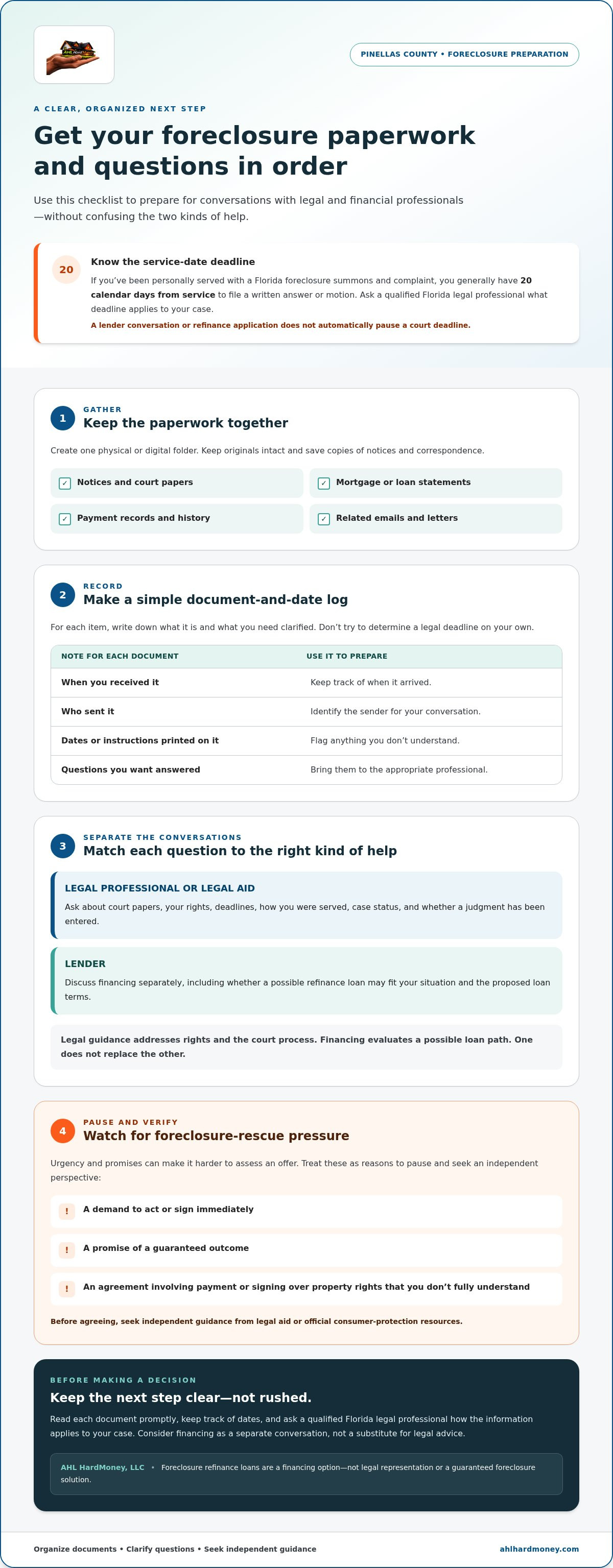
A foreclosure notice can make it feel as if every option is disappearing. Start by identifying what the document says and when you received it. If you’ve been personally served with a Florida foreclosure summons and complaint, you generally have 20 calendar days from service to file a written answer or motion. Pinellas County foreclosure help starts with understanding the deadline that applies to your case, not assuming a refinance application will pause it.
The fear and uncertainty are real, and so is the risk of foreclosure-rescue scams that pressure homeowners to act fast. This guide explains how to organize your paperwork, where to seek legal or consumer-protection help, and what to consider when weighing refinancing as a possible financial option.
AHL HardMoney, llc serves the entire state of Florida, including Pinellas County, and offers Foreclosure Refinance Loans. This is a financing option, not legal representation or a guaranteed foreclosure solution. The company states “No Hard Credit Inquiry,” “30 Min Approvals,” and a possible closing period of 5 to 15 days. Here’s what to consider as you assess whether a financing conversation could fit your situation.
Key Takeaways
- Pinellas County foreclosure help can include legal guidance, consumer-protection resources, and financial options. Each serves a different purpose.
- Read notices and court papers promptly, keep track of dates, and ask a qualified legal professional how the information applies to your case.
- Watch for foreclosure-rescue scam warning signs before sharing money, documents, or control of your property.
- Gather your property and loan documents, then prepare separate questions for a legal professional and a lender considering a possible refinance.
- AHLHardMoney™ serves the entire state of Florida, with a focus on Hillsborough, Pasco, Pinellas, Polk, Manatee, Citrus, and Hernando Counties.
Pinellas County Foreclosure Help: What to Do Next
A foreclosure notice or court filing can be frightening, especially when you’re unsure what needs attention first. You deserve clear, nonjudgmental information, not pressure or blame. Read each document promptly, save a copy, and identify any dates or instructions it contains. Don’t assume that talking with a lender or submitting a refinance application changes a court deadline. Ask a qualified Florida attorney or legal-aid service to explain the deadline that applies to your case.
Use this sequence to get organized before making decisions:
- Save the paperwork. Keep notices, court papers, loan statements, payment records, and related emails or letters together. A single folder makes it easier to find the information when you speak with a professional.
- Write down dates and questions. Record when documents arrived and highlight any dates or instructions you don’t understand. Don’t try to determine a legal deadline on your own.
- Contact the right professional. Direct questions about court papers, rights, and deadlines to a qualified legal professional. Discuss financing separately with a lender.
- Pause before signing. Read any proposed agreement carefully. Seek independent guidance before paying or transferring property rights under pressure.
Legal guidance addresses your rights and the court process; financing evaluates whether a loan path may fit your situation. These are different kinds of help, and one does not replace the other. For general background on judicial and non-judicial foreclosure processes, see this overview of foreclosure. For advice about your case, rely on qualified Florida legal help.
Which foreclosure documents and dates should you organize?
Put the notice, court papers, mortgage or loan statements, payment history, and relevant correspondence in one physical or digital folder. For each item, note when you received it, who sent it, any dates printed on it, and the questions you want answered. Keep the originals intact. If you’re unsure what a document means or when you must respond, ask a qualified Florida attorney or legal-aid service to review your case.
How can Pinellas homeowners recognize foreclosure-rescue scams?
Pinellas County Consumer Protection highlights scam awareness for homeowners facing foreclosure. Treat urgent demands, pressure to sign immediately, or promises of a guaranteed outcome as reasons to pause and seek independent guidance. Be especially cautious if an agreement involves signing over property rights or paying for a promise you don’t fully understand. Before agreeing, contact official consumer-protection resources or legal aid for an independent perspective.
Sound Pinellas County foreclosure help should make the next step clearer, not rush you into a decision. If you’re also assessing a potential financing path, AHLHardMoney™ offers Foreclosure Refinance Loans. This is a loan option, not legal representation or a guaranteed foreclosure solution. Keep the financing conversation separate from legal advice so you can understand both the court-related questions and the proposed loan terms before deciding what to do.
How Pinellas County foreclosure cases create different homeowner decisions
Foreclosure help isn’t one single service. It can include legal information about a case, consumer-protection guidance when an offer seems suspicious, and an assessment of financial options. Which steps matter most depends on your documents, circumstances, and case status. A notice, a response already filed, or a court judgment may each raise different questions. Don’t rely on a general article to interpret your timeline.
Legal guidance addresses your rights and the court process; financing evaluates whether a loan path may fit your situation. You can consider both at the same time, but they aren’t interchangeable. A loan application or discussion with a lender doesn’t provide legal advice or automatically pause a court deadline. Keep the two tracks separate, and ask a qualified Florida legal professional what must be addressed in your case.
What questions should homeowners raise about their case status?
Bring your documents to a qualified attorney or legal-aid service and ask how they apply to your circumstances. Useful questions may include:
- What does the paperwork say about how and when I was served?
- Does my case record show a response, and what should I understand about its status?
- Has a judgment been entered, or is the case at another stage?
- Are there alternatives to court action that may be relevant to my situation?
Use these as prompts for a professional, not as a checklist for deciding your own legal position. Don’t assume that a particular option is available or that a case will end in a specific way. The CFPB guide to avoiding foreclosure offers general information on contacting a mortgage servicer and exploring homeowner assistance. Use it for background, then get advice based on your own documents and timeline.
When should financing and legal guidance be considered together?
You can explore financing while separately addressing legal questions, particularly if you’re trying to understand which options may be practical. A lender may assess property and financial information, including whether home equity is relevant to a loan discussion. That assessment is different from legal advice. Equity alone is not a promise of approval or a particular result.
Before discussing a loan, organize your current loan information, property details, payment records, and any court papers. Ask what information is used to assess the proposed financing, what the terms would mean for your budget, and what costs or obligations appear in the written documents. Direct financing questions to the lender, and take questions about rights, filings, or court timing to legal help.
For a financing conversation focused on this situation, review AHLHardMoney™’s Florida foreclosure refinance loan information. It describes a potential financing path, not legal representation or a guaranteed foreclosure outcome. A useful Pinellas County foreclosure help plan keeps both conversations moving without treating one as a substitute for the other.
Compare Pinellas foreclosure help options without confusing legal aid and loans
Foreclosure concerns can call for more than one kind of support. Legal aid, consumer-protection resources, and a lender each serve a different purpose. Knowing the distinction helps you direct questions to the right place and avoid treating a possible loan as a substitute for legal guidance. Use the comparison below to decide which conversation to have first, or whether you need to pursue more than one at a time.
| Resource | Main purpose | What it does not replace |
|---|---|---|
| Legal aid or a qualified attorney | Helps address questions about court papers, rights, case status, and possible legal options. The type of help depends on the provider and its process. | A financial assessment of whether a new loan may suit your circumstances. |
| Consumer-protection resources | Offers guidance on recognizing suspicious practices and finding reliable information if an offer or promise raises concern. | Legal advice about your case or a lender’s assessment of financing. |
| Lender financing assessment | Considers whether a potential loan may fit based on property and financial information. | Legal advice, court representation, or a decision about your rights and deadlines. |
What does legal aid help with compared with lender financing?
Legal aid can help you understand legal questions or, depending on the provider’s process, offer representation. A lender evaluates a possible loan using property and financial information. Those roles are distinct: a lender does not interpret court papers on your behalf, and legal aid does not assess a lender’s proposed loan terms. If you receive a notice or court document, continue addressing it with qualified legal help even while considering financing.
For another overview of financing as one possible route, see this Florida foreclosure bailout guide. Treat general information as a starting point, not as a determination that a particular option will work for your case.
When might a foreclosure refinance be worth discussing?
A Foreclosure Refinance Loan may be worth exploring if you want to discuss refinancing secured by property as a potential financial option. A lender can assess relevant property and financial information, while you consider whether the proposed terms make sense for your broader budget. Homeowners’ circumstances differ, so don’t assume approval, suitability, or a particular result. A loan discussion also doesn’t automatically change a court timeline or remove the need to respond to legal notices.
AHLHardMoney™ offers Foreclosure Refinance Loans as a financing option, not legal representation or a guaranteed solution to foreclosure. For Pinellas County foreclosure help, keep the two tracks clear: take legal questions to qualified legal support and discuss potential financing with a lender. Before deciding, read proposed terms carefully and consider how the payment and obligations fit your circumstances.
Pinellas County foreclosure help checklist: prepare for a useful next conversation
A focused conversation is easier when your key information and questions are in one place. This checklist can help you prepare for Pinellas County foreclosure help, whether you’re speaking with a qualified legal professional or exploring a possible refinance. Use it to get organized, not as a mandatory document list or a substitute for advice about your specific case.
- Gather what you have. Collect property details, current mortgage information, payment records, income records, and relevant notices or case documents. Don’t delay asking for help because something is missing.
- Record important dates. Note when you received documents and any dates shown on them. Keep your notes factual, and ask a qualified legal professional how deadlines apply to your case.
- Write two question lists. Set aside legal questions for an attorney or legal-aid service, and financing questions for a lender. This helps each conversation stay focused on the right issues.
- Review information before deciding. Read any written loan terms, costs, and timelines carefully. Take time to understand a proposal before making a commitment.
What information can help explain your financial and property situation?
For a potential loan conversation, useful starting points may include the property’s location and ownership details, current mortgage statements, payment history, and records that describe your income and financial picture. Include relevant case documents so the lender can understand the context of your discussion. These are examples, not a guaranteed or required set of documents. AHLHardMoney™ takes a 360-degree view of the borrower’s financial scenario and provides personalized support. The information relevant to your circumstances may differ.
What should you ask before considering a refinance?
Focus on how the proposed refinance relates to your current loan and what you hope to accomplish. Ask what the written terms mean for the new obligation, what costs are involved, and what timeline is being discussed. Consider how any new payment and other obligations fit your budget. If a term is unclear, ask for an explanation before you agree.
AHLHardMoney™ states “No Hard Credit Inquiry” and “30 Min Approvals.” A possible closing period is “5 to 15 days.” These are stated process features and timing, not a promise of approval, a guaranteed closing, or a particular foreclosure outcome. A loan discussion also doesn’t replace legal advice or automatically change a court deadline. Keep questions about court papers, rights, and legal timing with a qualified legal professional.
Preparing this way gives you a clearer starting point without requiring you to have every answer before reaching out. For a potential financing discussion, AHLHardMoney™ offers Foreclosure Refinance Loans. Bring your questions, review the written terms carefully, and consider how the option fits your situation.
Explore AHLHardMoney™ foreclosure refinance help in Pinellas County
For homeowners considering financing, AHLHardMoney™ offers Foreclosure Refinance Loans. Headquartered in Tampa, the lender serves the entire state of Florida, including Pinellas County. Its focus counties are Hillsborough, Pasco, Pinellas, Polk, Manatee, Citrus, and Hernando Counties. AHLHardMoney™ also serves homeowners in Tampa, Clearwater, Saint Petersburg, Palmetto, Largo, Newport Richey, Port Richey, Brooksville, Brandon, Orlando, Daytona, Napels, Ocala, Deltona, Deland, Jupiter, Palm Beach, Lakeland, and Boca Raton. Legal questions remain with a qualified legal professional.
AHLHardMoney™ states “No Hard Credit Inquiry” and “30 Min Approvals.” A possible closing period is 5 to 15 days. These are stated process features and timing, not guarantees of approval, closing, or a particular foreclosure result. Consider any proposed loan terms in light of your property, financial situation, and goals.
How does AHLHardMoney™ approach a foreclosure refinance conversation?
The company takes a 360-degree view of the borrower’s financial scenario and provides personalized support. Its stated approach accepts any credit profile and both owner-occupied and non-owner-occupied properties. These details describe the lender’s approach, not a promise that every application will be approved or that a refinance will resolve a foreclosure case.
A conversation can help you understand the financing being considered. Bring relevant property and loan information, and be ready to describe what you hope a refinance could accomplish. Review the written terms carefully, including the payment obligations, costs, and timing presented. Raise questions about court documents, legal rights, or deadlines separately with qualified legal help.
What is the next step for Pinellas homeowners?
Start with the information you already have, then decide what you need to clarify. A lender can discuss a potential loan; a legal professional can address case-specific legal questions. Keep both conversations moving as needed, and don’t assume that applying or receiving an approval automatically changes a court schedule or foreclosure outcome.
To learn about the company’s background and financing approach, visit its About Us page. You can use it to understand who you may speak with and what a financing conversation could cover. Continue to address legal notices or deadlines with appropriate legal resources as you explore financing.
Choose a clear next step and move forward
You don’t have to settle every question at once. Choose one practical action for today: organize the papers in front of you, write down what feels most urgent, or arrange a conversation with the professional best suited to that concern. A small, deliberate step can replace some uncertainty with a clearer plan.
As you consider Pinellas County foreclosure help, keep your immediate priorities visible. What outcome are you hoping to preserve? Which question needs a legal answer, and which is about whether a financial option could work for your household? Putting those priorities in writing can make conversations more focused and help you assess proposals without feeling rushed. Continue to address legal notices with qualified legal support.
If you’d like to learn more about the people and approach behind AHLHardMoney™, visit the About Us page and decide whether a financing conversation is a useful next move.
One clear next step is enough for now. You can move forward carefully, with support suited to each part of the situation.
Frequently Asked Questions
What should I do first if I receive foreclosure papers in Pinellas County?
Read the papers promptly and contact a qualified Florida attorney or legal-aid service about your specific case. If you were personally served with a summons and complaint, Florida’s general response period is 20 calendar days from service, but your circumstances and method of service matter. Keep the papers and note when and how you received them. Pinellas County foreclosure help should begin with understanding your legal obligations, not assuming informal discussions change them.
Can I get foreclosure refinance help in Pinellas County with bad credit?
AHLHardMoney™ states that it accepts any credit profile and offers Foreclosure Refinance Loans, but that doesn’t guarantee approval or mean a loan will suit your needs. The company states “No Hard Credit Inquiry.” A lender still assesses the borrower’s financial scenario and property information. Ask for proposed terms in writing and consider whether the payment and obligations fit your budget before making a decision.
Does a foreclosure refinance automatically stop a foreclosure?
No. Applying for or discussing a refinance doesn’t automatically stop a court case, extend a response deadline, or guarantee a foreclosure outcome. Keep responding to legal notices as directed by qualified legal counsel while separately exploring financing. If a lender presents a possible loan, ask how its timing relates to your situation, but have an attorney explain any legal effect. Don’t treat an application, preliminary approval, or verbal discussion as a court order.
How quickly can AHLHardMoney™ approve and close a foreclosure refinance?
AHLHardMoney™ states “30 Min Approvals” and a possible closing period of 5 to 15 days. These are stated timeframes, not a promise that a particular application will be approved, close within that period, or stop a foreclosure. Keep court dates on your calendar and ask legal counsel how to handle them. A financing timeline and a court timeline are separate, so don’t wait for a loan discussion to address legal requirements.
Is foreclosure rescue help in Pinellas County legitimate?
Some assistance is legitimate, but a promise alone doesn’t prove it. Be wary of pressure to act immediately, guarantees about saving a home, or requests to transfer ownership or pay before you understand a written agreement. Pause and seek independent guidance from a qualified attorney or official Pinellas County consumer-protection resources. Don’t sign over property rights or rely on verbal assurances without understanding the document and its consequences.
What happens after a foreclosure judgment in Florida?
A judgment can lead to a court-directed foreclosure sale. Under Florida law, the sale is generally scheduled between 20 and 35 days after entry of final judgment. The owner’s redemption right may remain available until the clerk files the Certificate of Sale after the auction. Because the effect of a judgment and options at that stage depend on the case record, promptly ask a Florida attorney to explain the dates and procedures that apply.
Can I get free legal help for foreclosure in Pinellas County?
Eligible residents may be able to access free or low-cost help through local legal-aid organizations. Bay Area Legal Services can be reached at 800-625-2257, Gulfcoast Legal Services at 727-821-0726, and Community Law Program at 727-582-7402. Ask each organization about its intake process and eligibility. If you have court papers, have them available when you contact a service so staff can understand the type of help you’re seeking.
Does AHLHardMoney™ serve homeowners outside Pinellas County?
Yes. AHLHardMoney™ serves the entire state of Florida and is headquartered in Tampa. Its focus counties are Hillsborough, Pasco, Pinellas, Polk, Manatee, Citrus, and Hernando Counties. Homeowners elsewhere in Florida can explore the company’s financing programs as well. Statewide service doesn’t change the need to seek legal guidance about local court papers, case status, or deadlines.
Disclaimer:
While Dan is not a real estate attorney, he is a Full Time, Licensed Florida Mortgage and Real Estate Broker Professional coupled with 21+ years of successful strategies, methodologies and techniques that have proven effective to the benefit of Florida families.
While not every conversation is a deal, we promise to leave you better off then before you called. We serve everyone we come in contact, with the highest levels of integrity and dignity.
We invite you to make the call 📲


